

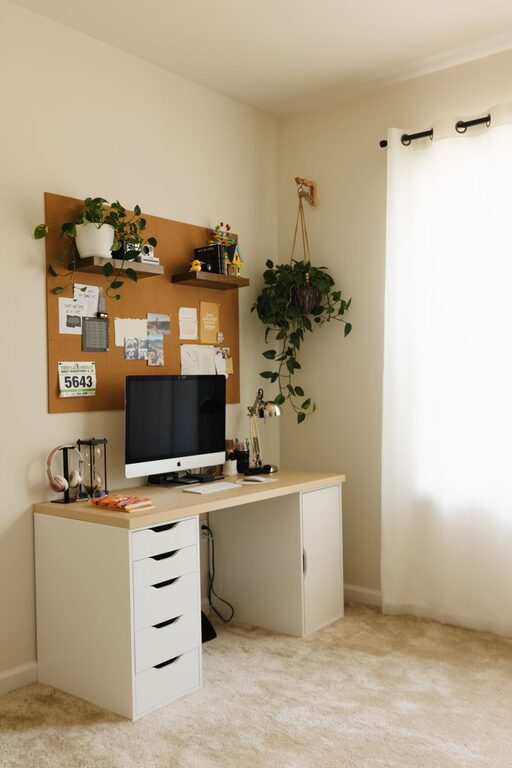
Creating a comfortable and efficient home office is essential for anyone working remotely or spending significant time at home on projects. A well-designed workspace can boost your focus, creativity, and overall satisfaction with your work environment. In this blog post, we’ll share practical tips on how to create a cozy yet productive home office space that supports your daily routine.
1. Choose the Right Location
Find a quiet and well-lit spot
Where you set up your home office makes a big difference. Look for a quiet area away from daily distractions such as the living room or kitchen. Natural light is ideal for your workspace, so try to position your desk near a window. Good lighting helps reduce eye strain and lifts your mood.
Consider privacy and noise control
If your home is busy, consider ways to minimize noise. This might mean using noise-cancelling headphones, adding rugs and curtains to absorb sound, or even placing your desk in a room with a door to close off distractions.
2. Invest in Comfortable and Functional Furniture
Choose an ergonomic chair
Comfort is key when you’re sitting for long periods. An adjustable ergonomic chair supports your back and encourages good posture, reducing the risk of discomfort or injury.
Get a spacious desk
A desk with enough surface area helps keep your work materials organized and within easy reach. If space is tight, consider wall-mounted shelves or foldable desks to maximize room.
3. Optimize Your Lighting
Use a combination of natural and artificial light
While natural light is best during the day, having a desk lamp with adjustable brightness can help keep your workspace evenly lit as daylight fades. Avoid harsh overhead lighting that might cause glare.
Position your light source thoughtfully
Make sure your light source doesn’t cast shadows on your work area, especially if you’re right or left-handed. This small adjustment can make a big difference to your comfort and efficiency.
4. Organize Your Workspace
Declutter regularly
A clutter-free desk reduces distractions and helps you focus. Keep only essentials on your desk, and store other items in drawers or organizers.
Use organizational tools
Desk organizers, filing trays, and cable management solutions keep your workspace tidy. Labeling storage containers can make it easier to find supplies quickly.
5. Add Personal and Cozy Touches
Incorporate plants
Adding greenery to your office brings life to the space, improves air quality, and has been shown to reduce stress.
Use soft textiles
A cozy rug, a comfy cushion, or a soft throw blanket can make your workspace more inviting and comfortable, especially during colder months.
Include artwork or inspirational items
Personalize your space with artwork, photos, or motivational quotes to create an environment that feels uniquely yours and keeps you motivated.
6. Manage Technology Efficiently
Invest in reliable equipment
A fast computer, good-quality headphones, and a reliable internet connection help prevent frustration and downtime.
Keep cords organized
Use cable ties or clips to keep cords neat and prevent tangling.
Consider dual monitors or a laptop stand
Extra screen space or raising your laptop to eye level can reduce neck strain and increase productivity.
7. Create a Routine-Friendly Environment
Set boundaries
Design your workspace so it feels separate from relaxation areas. This helps your brain associate the space with work and improves focus.
Incorporate a break area
If possible, include a small spot nearby where you can step away for short breaks—this encourages regular rest and increases productivity.
8. Maintain Good Air Quality and Temperature
Ensure proper ventilation
Fresh air keeps you alert and comfortable. Open a window regularly or use a small fan or air purifier.
Control room temperature
Adjust heaters or fans to keep your workspace at a comfortable temperature year-round.
—
Final Thoughts
Building a home office that balances coziness and productivity doesn’t have to be complicated. By thoughtfully choosing your location, investing in comfort, managing light and organization, and adding personal touches, you can create a workspace that supports both your well-being and your work goals. Take your time experimenting with different setups—your ideal home office is one that meets your unique needs and helps you feel your best every workday.